
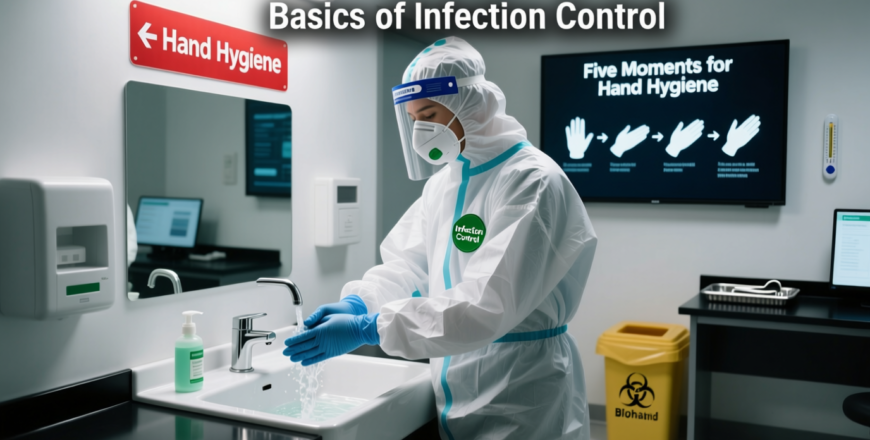
Basics of Infection Control

- Description
- Curriculum
- Reviews
The Basics of Infection Control course is a foundational training program designed to teach essential practices for preventing and controlling the spread of infections in healthcare and community settings. It covers key topics such as hand hygiene, use of personal protective equipment (PPE), cleaning and disinfection procedures, safe handling of medical waste, and standard precautions.
The course aims to equip participants with the knowledge and skills needed to protect themselves, patients, and others from infectious agents.
-
2
 1. Introduction
This course covers the most important goals of infection control, which are:
By the end of this presentation, you will be able to be aware about:
1. Describe some important historical events in the field of infection prevention and control
2. The goal of infection control implementation and responsibilities.
3. The meaning of the infection chain and the causes of infectious diseases, who is most at risk for getting infection.
4. The meaning and types of healthcare-acquired infections (HAI)
5. Know the meaning of the bundle and bundle types
6. Type of standard precaution.
-
3
2. History of Infection prevention and control
This lesson explores the key milestones in the history of infection prevention and control from early hygiene practices to the groundbreaking discoveries of pioneers like Semmelweis, Lister, and Pasteur highlighting how scientific advances transformed healthcare safety worldwide.
-
4
 Quiz 1
 -
5
3. The goal of infection control implementation and responsibilities
This lesson outlines the core objectives of infection control - preventing healthcare-associated infections - and clarifies the shared responsibilities of all healthcare personnel in maintaining a safe environment for patients, staff, and visitors.
-
6
Quiz 2
-
7
4. The infection chain and the types of healthcare-acquired infections (HAI)
This lesson explains the infection chain - its links and how breaking them prevents transmission- and introduces common types of healthcare-associated infections (HAIs), including urinary tract, surgical site, bloodstream, and respiratory infections.
-
8
Quiz 3
-
9
5. The Basics of IPC practices (Standard Precaution part1)
This lesson introduces the fundamentals of Infection Prevention and Control (IPC), focusing on Standard Precautions—essential practices like hand hygiene, personal protective equipment (PPE), and safe handling of patient care equipment to protect against infection transmission.
-
10
Quiz 4
-
11
6. The Basics of IPC practices (Standard Precaution part2)
This lesson introduces the fundamentals of Infection Prevention and Control (IPC), focusing on Standard Precautions—essential practices like hand hygiene, personal protective equipment (PPE), and safe handling of patient care equipment to protect against infection transmission.
-
12
Quiz 5
-
13
7. The Basics of IPC practices (Standard Precaution part3)
This lesson introduces the fundamentals of Infection Prevention and Control (IPC), focusing on Standard Precautions—essential practices like hand hygiene, personal protective equipment (PPE), and safe handling of patient care equipment to protect against infection transmission.
-
14
Quiz 6
-
15
8. Isolation precautions expanded precautions
This lesson covers expanded (transmission-based) isolation precautions—contact, droplet, and airborne—and explains when and how to apply them to prevent the spread of specific infectious agents in healthcare settings.
-
16
Quiz 7
-
17
9. Environmental control & A septic technique
This lesson highlights the role of environmental cleaning, disinfection, and sterilization in infection prevention, and introduces aseptic technique—critical practices to maintain sterility and prevent microbial contamination during procedures.
-
18
Quiz 8
-
19
10. Needle Stick Injury Management
This lesson outlines the immediate steps to take following a needlestick injury, including wound care, reporting, risk assessment, and post-exposure prophylaxis to prevent infection transmission.
-
20
Quiz 9
-
21
11. Example of managing infection control, Monkeypox pandemics - part 1
This lesson presents a real-world example of infection control in action, focusing on the initial public health and clinical response to the Monkeypox outbreak, including case identification, isolation, contact tracing, and prevention strategies.
-
22
Quiz 10
-
23
12. Example of managing infection control, Monkeypox pandemics - part 2
This lesson presents a real-world example of infection control in action, focusing on the initial public health and clinical response to the Monkeypox outbreak, including case identification, isolation, contact tracing, and prevention strategies.
-
24
Quiz 11
Which was held Online Activity has been accredited by: Saudi Commission for Health Specialties For 4 CME
All Medical Staff
جميع التخصصات الصحية
All Medical Staff
جميع التخصصات الصحية